Showing posts with label travel. Show all posts

Wednesday, May 13, 2009

Vienna photowalk

A couple of weeks ago had the opportunity to spend a couple of days in Vienna and brought my equipment with me. Here is a list of my equipment for this occasion:

  • Olympus E3
  • Olympus E30
  • Olympus Flash FL-50R (Very useful while inside a Barn)
  • Sigma 30mm 1.4
  • Zuiko 8mm 3.5 (great for cow and calf close-ups)
  • Zuiko 50-200mm 2.8
  • Zuiko Teleconverter 2X EC-20
  • Zuiko 11-22mm 2.8
  • ND Filters
  • Small Table top tripod
  • Hoya Polarizer Filters

    Most of the sites worth visiting in Vienna are contained within the city center and easy to get around either by walking or tram.

    Here is an overview of the walk by using my AMOD GPS tracker as well as GeoSetter for attaching  GPS coordinates for my Olympus Raw Files. One thing I have found out while traveling on old cities with narrow streets is that it will be common for the GPS to lose connection with the satellites, so make sure you adjust your settings to your Software accordingly to ensure that you tag the picture to the closest available tracking point.
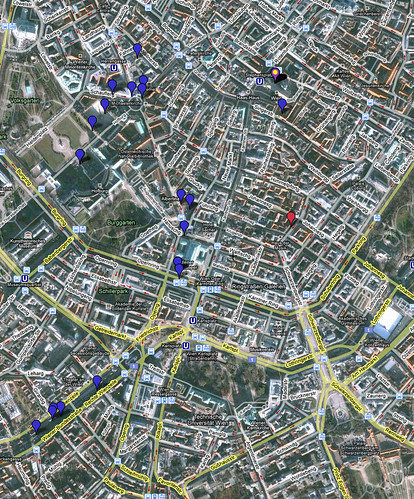
  • Vienna Photowalk

    A good way to track the main sites to photograph is by using the Rick Steves guides for Europe, I always travel with one as the contain easy to follow maps as well as tips for avoiding crowds, using public transportation, etc.

    Some of the highlights of the city are:

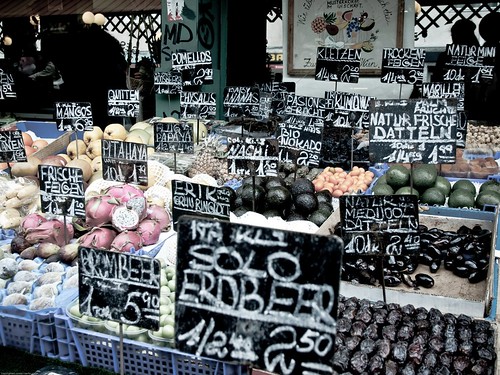
    NaschtMarket:

    Located between the left and right Wienzeile, the Naschmarkt extends from the Kettenbrückengasse to the Getreidemark, on an elevation to the Secession.

    Differently to as the name implies, there aren’t only sweets to buy at the Naschmarkt: Fresh fruit and vegetables from around the world, exotic spices, meat, fish and ecological foods are offered for sale on the colorful market stands. Early in the morning cooks and chefs already crowd around the market looking for fresh specialties. Later, after a Viennese breakfast in one of the numerous cafes, bars or delis located around the Naschmarkt, the "laymen" start their search for culinary treats. Delicacies from the Naschmarkt make a favorite gift with Vienna holiday-makers.
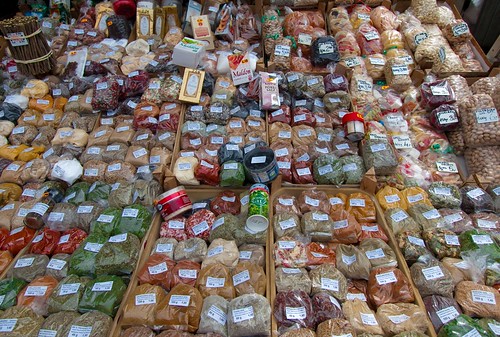
    Spices Sale on....????  

    On Saturdays you'll not only find delicious treats at the food market but also curiosities, old and beautiful things on the street market stalls adjacent to the Naschmarkt. The wares offered are completely mixed, for beautiful souvenirs it helps to be a skillful bargainer.

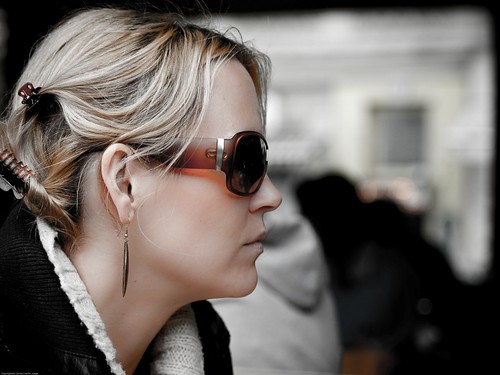
    There are great opportunities for those that also want to take candid pictures of people haggling (specially on the antiquities area at the end of the market), friends having breakfast and the intellectual crowd.
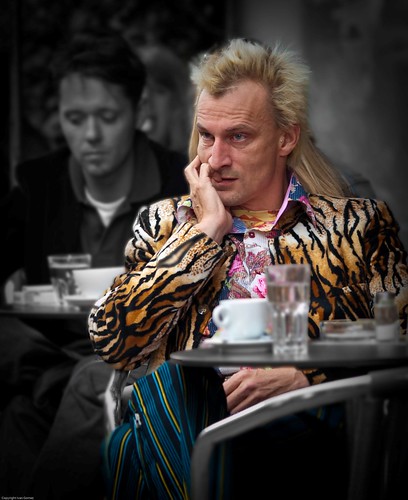
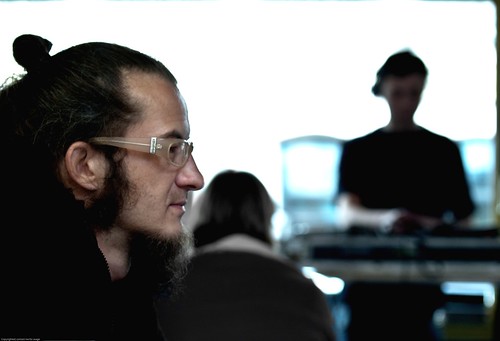
    A tiger in the Naschmarkt The dude and the DJ Lady @ the market

    Opera House and Concert Hall

    Try to attend a music concert either on the Opera or the Music Concert Hall. Its allowed to bring your camera but not a tripod. You can see people dressed as in the times of Mozart. As well a both buildings have great architectural detail. Make sure to boost the ISO and bring a sharp lens
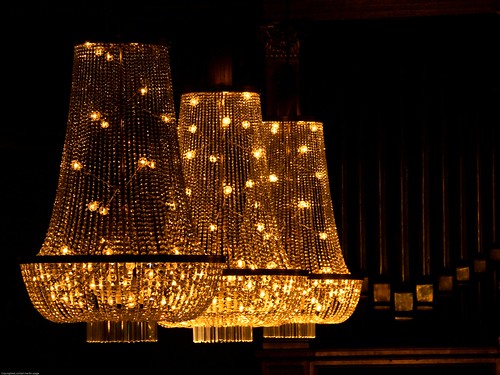
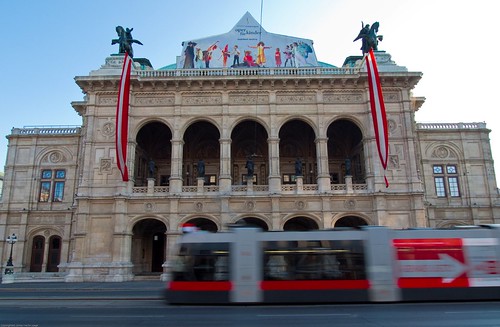
    CandelabrosOpera and Tram

    City Center

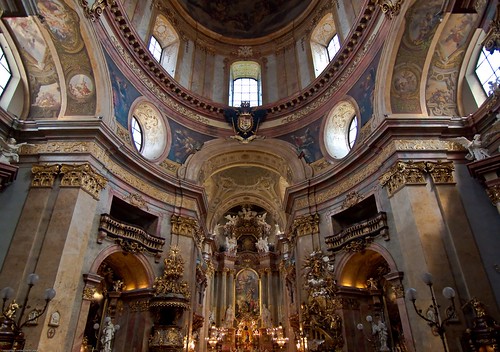
    Within the Opernring there are lots of opportunities to take advantage of the city architecture. Some examples are St Stephens Cathedral, Rathaus, State Opera, among others. It gets very crowded, what I ended up doing was getup at sunrise to take full advantage of the buildings without any crowds. You can check the sunrise and sunset times throughout the year for most cities in the world here.
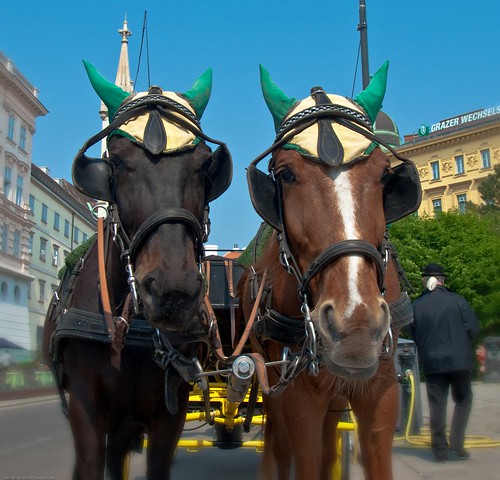
     

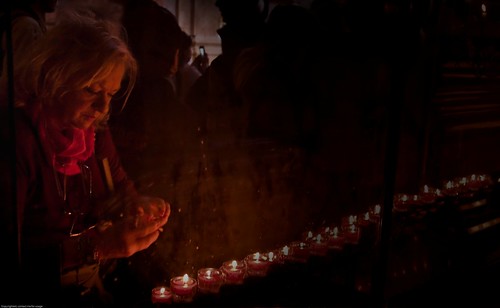
    Pointy little hats A prayer
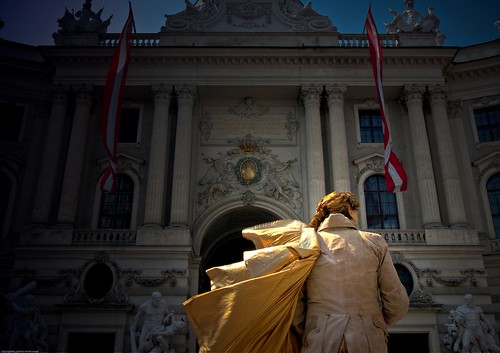
    P5019241 Golden Mozart
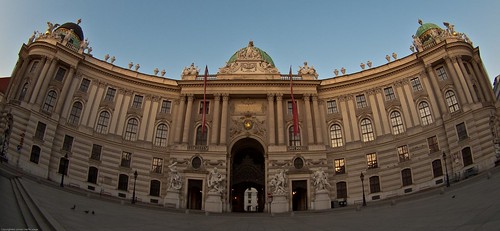
    Entrance to Vienna Austria

    Wednesday, August 27, 2008

    Tips on..<Time of the day (Urban)>

    Dawn

    The cold blue light of dawn is extremely complementary to urban landscape shots, accentuating the steely exteriors and the smooth glass facias, This soft light is great for shooting images that yo dont want over-ridden with shadow.

    Check the weather forecast and pack your gear the night before instead of crashing around in the morning forgetting stuff.

    Meter for the sky to maximize colors which will also maintain the rich hues.

    A warm up filter in a color such as coral will also help create a sense of vibrancy in your shot. Obviously at this time you will face less hazel from security guards and police so make the most of this time. And make sure to bring a tripod

    Midday

    At midday the sun is at its brightest and creating harsh shadows. Use this to your advantage creating a contrast punchy look where the highlights and shadows conflict. Make sure you select your WB for a daylight setting and meter carefully for the midtones. Bracketing is a particular important at this time in the das as it might only be a matter of stops between a flat washed out image and a really striking one. To darken the blue lights bring a polarizer. This i also a great time to go inside the buildings and look for details and capture abstract shoots of things like foyers or office blocks

    Nighttime

    This lends itself to the more creative appraoch enabling for long exposures, lighting effects and reflections.

    Riverbanks are a great location to capture city scapes as the reflection of the lights on the water creates a double impact.

    Nighttime is about making the most of shapes and silhouettes, rather than intricate details, so cast an eye across the skyline for strong outlines and forms.

    Usually the most dramatic ones are captured just before nightfall when there is still a touch of color in the sky

    del.icio.us Tags: ,,,,

    Tips on... <Urban Landscape>

    Early bird catches the worm

    Prospective perspectives

    Your perspective should differ depending on the shape and form of what's before you. For square buildings try to shot at a 40-60 degree angle to avoid a flat image, for domes or curved shapes its important to feature some background in order to the viewer to appreciate the form

    Up and coming

    Should not only be dedicated to the built environment, take a look around you and see what's happening construction wise. Documenting a building going up can make a for a great addition to your portfolio, while renovations are always an interesting subject to shoot

    Permission to shoot

    Be aware that many places require you to possess a licence before you can shoot on its grounds. Just like a model release form these building release forms cover how the images will be used and determines who holds the copyright. You can often negotiate to exchange images in return for a photo pass.

    Angle attack

    The best way to find new approaches to shooting well known buildings is to approach them from all angles, Search for unusual features or crevices that are rarely seen in the usual publicity shots of that place, and go in from that angle instead. Look out for patterns, reflections and textures to really bring out the buildings characteristics

    Once you have found a location the next stage is being able to approach your scene in a variety of ways photographically, playing on perspective, viewpoint and light. Look for places that will look great close up as abstract images but also will produce impact as a full frame image

    Some prefer to shoot from a distance some prefer to accentuate angles and other shoot for pattern or repetition.

    Place yourself where the reflective rays do not directly shine onto your lens, or else your images will be a complete whitewash. Sometimes a polarizing filter will help you manipulate reflective scenes to your advantage. It will enable you to suppress subtle reflections and darken any blue sky mirrored in the building's glass.

    Many prestigious buildings will be flood light at night, which represents some challenges, The bright light coupled with harsh shadows makes it a tricky subject to choose. Underexpose then tweak if needed. Is better also to bracket your shots. Find a midtone and then use spot metering

    Panoramas

    Lens selection

    Opt for a standard len to ensure threre is no distortion, Wide angle lenses are more susceptible to this than normal lenses

    Steady now

    Choose a tripod with a panning head to ensure a smooth transition that is level and lined up correctly for each shot

    Shoot in line

    Being taking your shots starting from one side and progressing to the other. Make sure you overlap your last shot by a third each time, to ensure they line up afterwards.

    Make it merge

    Upload your shots in Photoshop or a similar program. No matter the program, some editing will be required to make the images match

    Use manual

    To ensure that no readings are changed between lights, such as fstop, shutter speed, etc that could alter one of the shots you can use and make it look different from the rest

    del.icio.us Tags: ,,,

    Tips on...<Travel, Creative>

    Unforgettable Images..travel

    Heading off the beaten track is a guaranteed method for limiting your chances of cliched travel images, but remember that in this day and age you would have to be very quick to snap something that hasn't been photographed.

    Boosting creativity

    • The use of unusual perspective is an obvious option for boosting creativity. Getting down low with a wide-angle lens of 24-42mm will give an extreme edge to any landscape, as will using a fish eye lens which will work to distort the trye dimensions of the scene in front of you
    • Timing of photography is another key factor in determining the result image. You could for example wait for what is assumed to be a remote untouched location to become swamped in rush hour traffic and then shoot for impact.

    In detail

    • Homing in on small details is a superb stylistic point in many travel photography portfolios, whether it happens to be the people, a street sign, local product or something that springs to your attention just as you are about to the press the shutter button. Something as simple as a door knocker, a plate of food or even a ceramic tile provided it is photographed well and in focus, can reveal a lot about a different culture

    Avoid the crowds

    Get up early, the light is fantastic at sunrise.

    Create a contrast

    Always use a lens hoodon your camera lens. This way you will avoid flare and create better contrast in your photos, specially on hot sunny locations

    Back Up

    Remember to back up everything you shoot at least twice. If not you run the risk of losing your images.

    Get involved

    Aim to be part of your photographs specially when you are photographing people.Get them to react and relate to you and your personality and you will find creating unique pictures comes easier

    del.icio.us Tags: ,,

    Portraits and Festivals

    Portraits and Festivals

    • Language barriers can be overcome with a good phrase book
    • Show the peopel you just captured their image on the LCD screen
    • Children are especially eager to become the start of the screen
    • Make sure to know the settings on your camera, dont waste any time fiddling with your camera while trying to take somebody's picture
    • Getting the right background is key to a successful portrait, make sure you dont include clutter that could take away from the focus point of the person
    • Fill the frame as much as you can with your subjects face and ensure the best angle of light casts evenly across your subject. Using a wide aperture of f2 of f5.6 will throw the background out of focus to flatter the main subject
    • If you are unable to gain eye contact with your portrait subject, then candid shots can prove just as effective
    • Using wide angle lenses enables this to be captured on camera -the person will remain the central focus, but the details of what is going around him or her will add a story to the scene somewhat verging on the photojournalist style, and will lend human impact to your pictures

    Singer

    Tips on...<Travel.. creativity>

    Heading off the beaten track is a guaranteed method for limiting your chances of cliched travel images, but remember that in this day and age you would have to be very quick to snap something that hasn't been photographed.

    Boosting creativity

    • The use of unusual perspective is an obvious option for boosting creativity. Getting down low with a wide-angle lens of 24-42mm will give an extreme edge to any landscape, as will using a fish eye lens which will work to distort the trye dimensions of the scene in front of you
    • Timing of photography is another key factor in determining the result image. You could for example wait for what is assumed to be a remote untouched location to become swamped in rush hour traffic and then shoot for impact.

    In detail

    • Homing in on small details is a superb stylistic point in man travel photography portfolios, whether it happens to be the people, a street sign, local craft product or something that springs to your attention just as you are about to the press the shutter button. Something as simple as a door knocker, a plate of food or even a ceramic tile provided it is photographed well and in focus, can reveal a lot about a different culture

    Tips on...<Travel>

    Travel Photography tips

    Is good to go to a location and have a them around the photoshoot. Get an assignment

    • Working hands
    • Colorful
    • Street names
    • Vivid Colors
    • Close up Local architecture
    • Children
    • Keep it friendly when approaching people
    • Know when to back down. dont be upset by a refusal, just try somebody else
    • Learn the lingo:: learn a few basic words from the language of the country you are visiting, at least please and thanks
    • Understand the culture: research into local customs
    • Fill the frame: get in as close as possible to the subject
    • Research your destination thoroughly, if you get some research done it will tell you what kit to bring
    • Make the light work for you. Bring a reflector/diffuser kit and a flash with a diffuser. Controlling the light is key for a good portrait
    • Know the best time to shoot: Avoid harsh sunlight if possible move the subject to the shade
    • When shooting wildlife, preparation is key: Bring the longest lens you have
    • Consider composition carefully. Dead Center is deadly. Position the subject off-centerfor a more interesting composition
    • Experiment with filters: Use a polarizing filter, to reduce glare on water and foliage
    • Ask permission to take pictures of people:
    • Change your perspective, tell more of the story by using wider lenses.
    • For more marketable pictures, try writing, it helps selling a set for a certain location
    • Create a diary of your travels, this will help tell a story of your set

    Checklist before you go...

    • Do your research: read upon the area for things to shoot where to go and where not to
    • Check your documents
    • Equipment list
    • Clean Equipment
    • Check equipment (take a few test shots)
    • Charge batteries
    • Power (dont forget a travel adapter)
    • Check airline restrictions for carry-on on passport and electronics
    • Storage; enough memory cards and back up units in case those cards fill up

    Think Kit

    Make sure you pack the right equipment. Think about these filters, lenses and cameras to suit all the photographic situations you might encounter. A circular polarizer is a most

    Outside the box

    Capture not only buildings and locations but the locals while on your travels and you will have some outstanding shots

    Add context

    Although some shots look like they could have been taken anywhere in the world, make sure your shots dont. Add subtle touches like a local language sign pr native animal to your shot to give a little context

    Zoom In

    Great travel shots arent just sweeping vistas and huge buildings. Get up close and shoot individual hieroglyphs, single crucifixes or sained glass windows

    Colour composition

    Take advantage of local dress, landmarks and culture to take striking photos.. The rules of composition still apply, but you could try to vary your viewpoint to get more exciting frames

    After dark

    Wait until the lights go down brefore you get your camera outm Dusk and sunset hours are beautiful by the water. Look out for reflections, slow your shutter speed.

    Local people

    Landscapes may be the most common travel shots, but the ones if local people are often the shots that speak the loudest. Make sure you ask permission to take their photo

    In the wild

    Invest in a good telephoto lens as well as abean bag. Its essential for a safari

    Do your research

    Find out everything you can before travel. What events are going while yuou are there. Are there any high vantage points to shoot from?.

    Research what your destination has to offer and what makes it unique. Research travel brochures it can give you a good indication of whats been shot, so you dont repeat it, but it also is a good start

    Find out of any festivals as well as where the local markets are, this creates a huge opportunity. If you want to add some portraits to the mix, learning some of the local language helps

    Ideally you should carry 2 DSLR bodies and with them a collection of overlapping lenses a telephoto, tele-zoom and two wide-angle. Keeping lenses to a minimum will mean less switching and less risk to your sensor getting dirty or damaged.

    For shooting on the move a good back up unit is essential, there are several at different prices, I personally own this one. Some extras to pack on your bag are a tripod (carbon fiber would be ideal), cable release, USB cables and spare memory cards. Graduated filers could be consider a luxury if you want to travel light as some of this effect can be recreated in Photoshop

    Places I've shot in